
Crawl Space Encapsulation Chicago
SEAL IT, DRY IT, FORGET IT
Sealed vapor barriers, insulation and drainage that turn a damp, moldy crawl space into a dry one. Stops the moisture, the musty smell and the cold floors above it.
- Home
- Crawl Space Encapsulation
The Air In Your Crawl Space Is The Air In Your House
Most homeowners think of a crawl space as sealed off from the rest of the house. It is not. Air moves upward through a building continuously, because warm air rises and leaves through the upper levels, and something has to replace it from below. That replacement air is drawn up out of the crawl space.
Estimates vary, but a substantial share of the air you breathe on your main floor started underneath it. Which means if your crawl space has damp exposed soil, mold on the joists and standing water after every rain, all of that is being pulled up into your living space along with the moisture.
That explains the symptoms people usually call about. A musty smell nobody can locate. Cold floors no amount of heating fixes. Humidity upstairs in summer that the air conditioning fights all season. Allergy symptoms that are worse at home than anywhere else. The crawl space is rarely the first place anyone looks, and it is very often the source.
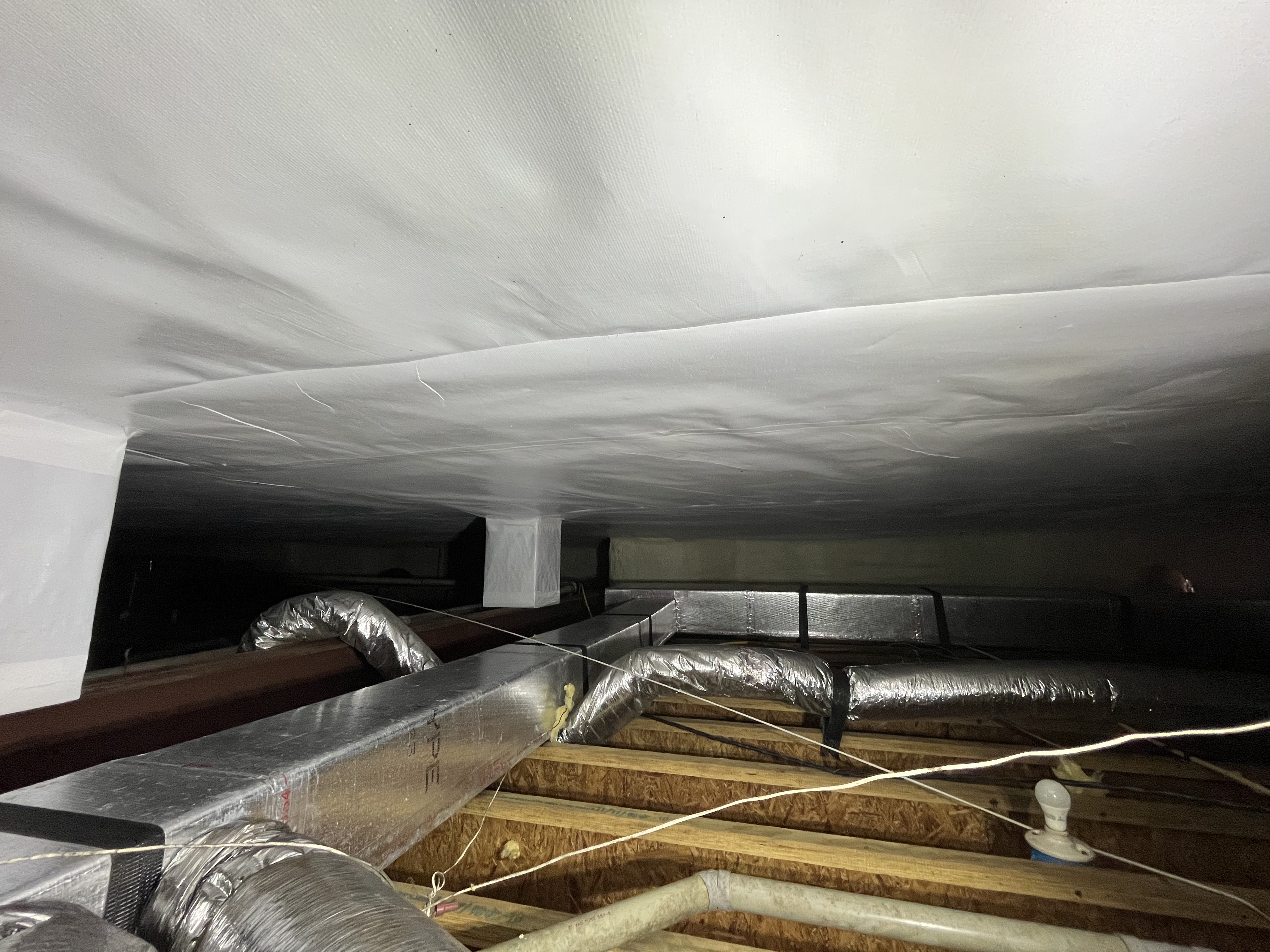
Encapsulation solves it by sealing the crawl space off from the ground and the outside air entirely. Heavy vapor barrier across the floor and up the walls, vents closed, insulation applied to the walls rather than the ceiling, drainage and dehumidification added where needed. The crawl space becomes part of the conditioned building envelope rather than a damp gap underneath it.
Chicago Basements Waterproofing & Foundation has been doing this work across the city for 30 years.
Book Your Free Inspection
What Encapsulation Includes
Reinforced polyethylene liner across the entire floor and up the foundation walls, sealed at every seam and mechanically fastened. This is the component that separates your house from the soil moisture underneath it.
Foundation vents closed and sealed. Venting a crawl space was standard practice for decades and it is now understood to make moisture problems worse in a climate like Chicago's, because it draws in humid summer air that condenses on cool surfaces.
Rigid foam applied to the foundation walls rather than fiberglass batts between the floor joists. Batts in a crawl space absorb moisture, sag, fall down and become a mold substrate. Wall insulation keeps the crawl space and the floor above it warm.
Perimeter drainage and a sump pump where groundwater enters. Sealing a crawl space that still takes on water traps the water underneath the liner, so the drainage goes in first.
A dedicated crawl space dehumidifier with a drain line, sized for the space, holding humidity at a level where mold cannot establish.
Existing mold treated and affected surfaces cleaned before anything is sealed. There is no point encapsulating over an active problem.
Joists, beams and subfloor damaged by years of moisture repaired or replaced while access is open.
Sealing the crawl space closes the entry points that rodents, insects and other pests have been using. A dry sealed crawl space is a far less appealing place to live.
Signs Your Chicago Crawl Space Needs Encapsulation
Underpinning may be needed when foundation settlement, structural movement, or soil instability threatens the stability of your Chicago home.
✔ A musty or earthy smell in the house that never fully goes away
✔ Floors above the crawl space that stay cold all winter
✔ High humidity upstairs during summer despite running the air conditioning
✔ Visible mold or white fuzzy growth on joists, beams or subfloor
✔ Standing water or persistently damp soil in the crawl space
✔ Insulation that has fallen down or is hanging between the joists
✔ Condensation on ductwork, pipes or the underside of the floor
✔ Rust on ductwork, fasteners or metal strapping
✔ Wood that feels soft, spongy or darkened
✔ Allergy or asthma symptoms that are worse at home
✔ Rodent droppings, nesting material or insect activity
✔ Exposed dirt floor with no barrier at all
✔ Foundation vents that have been open for decades
✔ Sagging or bouncing floors above the crawl space
The cold floors are the tell. Homeowners assume it is a heating problem or poor insulation upstairs. Usually it is a crawl space pulling cold, damp air in through open vents all winter, directly beneath the floor you are standing on. Sealing it warms those floors more effectively than anything you can do to the furnace.
Why Chicago Crawl Spaces Turn Into A Problem

Summer is the surprising half. Chicago summers are genuinely humid, and warm humid air holds a great deal of moisture. When that air is drawn through open foundation vents into a crawl space where the soil and masonry sit far cooler, the moisture condenses out onto every surface it touches. Joists, ductwork, pipes, subfloor. This is why a crawl space that was designed to be ventilated is often at its wettest in July, and why homeowners are baffled to find water underneath the house during a dry spell. The ventilation is causing it.
Winter runs the problem backward. Frigid air pours in through those same vents, chilling the floor above and pulling heat out of the house all season. Meanwhile warm moist air from your living space is rising and meeting cold surfaces, condensing where you cannot see it.
The clay keeps the ground wet. Chicago’s dense glacial clay does not drain, so a crawl space floor over that soil stays damp continuously. Uncovered soil releases moisture into the air above it constantly, and in a confined space with no drainage that moisture has nowhere to go.
The spring thaw floods them. Frozen clay absorbs nothing, so meltwater runs across the surface and collects against the foundation. Crawl spaces sit at exactly the elevation where that water arrives, and many take on standing water every March.
The housing stock predates the understanding. Crawl spaces in Chicago homes built before the 1970s were built with open vents, bare dirt floors and no vapor barrier, because at the time ventilation was believed to be the solution to moisture rather than a cause of it. Building science moved on. Those crawl spaces did not.
Encapsulation Or Vapor Barrier Only?
Two very different quotes get given for crawl space work, and understanding the gap between them prevents disappointment.
Vapor barrier only means laying plastic sheeting across the crawl space floor, sometimes taped at the seams, sometimes not. The vents stay open, the walls stay uninsulated, nothing is sealed to the foundation and there is usually no dehumidification. It is inexpensive, it is genuinely better than bare soil, and it will reduce the moisture coming up from the ground.
What it will not do is stop humid summer air entering through the vents and condensing on cold surfaces, which is the larger problem in a Chicago crawl space. The musty smell, the mold on the joists and the cold floors usually persist, because the air side of the problem has not been touched.
Full encapsulation seals the crawl space as a system. Heavy reinforced liner across the floor and up the walls, sealed and fastened. Vents closed. Walls insulated. Drainage handled. Humidity controlled. The crawl space becomes part of your conditioned house rather than a vented gap underneath it, and the problems stop rather than reducing.
Which one is right. If your crawl space is genuinely dry, well drained, and your only concern is soil moisture, a proper vapor barrier may be adequate and there is no reason to spend more. If you have any of the mold, smell, cold floor or standing water symptoms, a vapor barrier alone will not resolve them, and paying for one is usually paying twice.
One thing to be firm about. Do not let anyone encapsulate a crawl space that still takes on water. Sealing a liner over an active water problem traps it underneath, and the first you will know about it is when the smell gets worse. Drainage first, always.
How It Works
1
Free Inspection
We go in. We assess moisture levels, look for mold and wood damage, check the existing insulation and vapor barrier, identify where water is entering, and inspect the joists, beams and ductwork.
2
Photos And Explanation
Most homeowners have never actually seen their own crawl space. You get photos of what is down there and a plain explanation of what is causing it.
3
Written Estimate
Itemized and clear. Scope, materials, drainage requirements, price and timeline agreed before anything begins.
4
Remediation, Drainage And Encapsulation
Debris cleared, mold treated, water damaged wood repaired, drainage installed where required, then the liner, insulation and dehumidification. Site cleaned and the finished space photographed, so you can see the result without going in yourself.
30 Year's Experience
Experience you can trust
GOOGLE 4.9/5 ★★★★★
Real results. Real people.
Licensed, Bonded & Insured
Fully covered, fully accountable