Drywall Repair & Finishing Chicago
PROFESSIONAL REPAIR AND FINISHING
Water damage restoration, patching, texture matching and full basement finishing. The part of the job that makes everything else look like it never happened.
- Home
- Dry Wall
The Repair Nobody Thinks About Until The Real Work Is Done
Most of our drywall work happens at the end of something else. A basement gets waterproofed, a foundation crack gets injected, a wall gets underpinned, a leak gets traced and fixed. Then there is a hole in the ceiling, a stained section of wall, or a finished basement that had to be opened up to get to the problem.
That is the point where a lot of contractors hand you a phone number and leave. We would rather finish the job. A homeowner who has just spent serious money solving a water problem should not then have to find, vet and schedule a second trade to make the room usable again.
There is also a right order to this work that matters more than people expect. Drywall goes back after the water problem is fixed, not before, and not at the same time. New board installed against a wall that is still taking on moisture will stain, soften and grow mold behind the paint within a year, and the homeowner will reasonably conclude the waterproofing failed. It did not. The drywall went up too early.
Chicago Basements Waterproofing & Foundation has been doing both halves of this work for 30 years.
Book Your Free Inspection
Our Drywall Services
Damaged board cut out and replaced, framing checked and treated, and the affected area restored. Water damaged drywall cannot be dried and reused once it has softened. It has to come out.
Stained, sagging and damaged ceilings repaired, including the areas opened up to trace a leak back to its source.
Making good after foundation work, plumbing, electrical or waterproofing installation. Access holes closed, walls restored, finishes matched.
Framing, insulation, hanging, taping and finishing to turn a waterproofed basement into a usable room. Done properly, with moisture resistant materials where they belong.
Nail pops, settlement cracks, holes and damaged corners repaired and finished so they disappear rather than showing as a patch.
Full taping and finishing to the level required, whether that is a utility basement or a finished living space.
Matching existing wall and ceiling texture so a repair blends into the surrounding surface instead of advertising itself.
Mold resistant board and appropriate materials in basements, bathrooms and any below grade space. Standard drywall in a Chicago basement is a future problem.
Signs Your Drywall Needs Repair
Underpinning may be needed when foundation settlement, structural movement, or soil instability threatens the stability of your Chicago home.
✔ Brown, yellow or rust colored staining on a ceiling or wall
✔ Paint bubbling, blistering or peeling away from the surface
✔ Drywall that feels soft, spongy or crumbly when pressed
✔ Visible mold or dark speckling on the wall surface
✔ A persistent musty smell in a room with no obvious source
✔ Sagging or bowing in a ceiling
✔ Tape lifting or seams separating
✔ Nail pops appearing in rows
✔ Cracks spreading diagonally from the corners of doors and windows
✔ Baseboards swollen, warped or separating from the wall
✔ Efflorescence or white residue on a basement wall behind the finish
✔ Holes and damage left behind after other work
✔ Standard drywall installed directly against a basement foundation wall
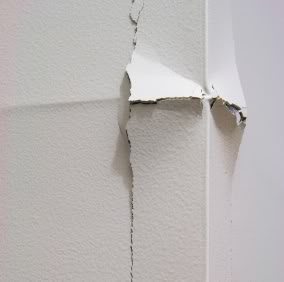
A word about the diagonal cracks. Cracks running diagonally from the corners of doorways and windows, particularly if they keep reappearing after being patched, are usually not a drywall problem. They are the drywall reporting movement in the structure underneath. Patching those without addressing the cause means patching them again next year. If you are seeing them alongside sticking doors or sloping floors, that is a foundation conversation first.
Why Chicago Homes Are Hard On Drywall
The basements are the obvious problem. Chicago’s dense clay holds water against foundations, and any below grade wall is managing moisture continuously. A finished basement with standard drywall hung against a foundation wall, with no vapor management behind it, is holding a paper faced product against a damp masonry surface. It works until the first wet spring.
Summer humidity affects the whole house. Chicago summers are genuinely humid, and that moisture migrates into wall cavities, condenses on cool surfaces and soaks into drywall from behind where nobody sees it. Basements and rooms above crawl spaces get it worst, because the air moving upward through the building carries moisture with it.
Winter runs the problem in reverse. Warm interior air meets cold exterior walls and condenses inside the cavity. Ice dams push meltwater backward under shingles and down into ceilings. A significant share of the water damaged ceilings we repair in Chicago were damaged in January by ice, not in June by rain.
The structure moves seasonally. Clay soil swells in spring and shrinks in summer, and the building moves with it. Drywall is rigid and fastened to framing that is flexing, which is why nail pops and corner cracks reappear in the same places each year in older Chicago homes.
The housing stock complicates it. Many Chicago homes have had drywall installed over original plaster, over furring strips against masonry, or in basements finished decades ago with materials nobody would use today. What is behind the wall is frequently not what the homeowner expects.
Patch Or Replace?
The temptation with water damaged drywall is always to dry it out and repaint. That almost never works, and here is the line between the two.
Patching is the right answer when:
The damage is physical rather than moisture related. Holes, dents, damaged corners, nail pops, small cracks, or access openings cut during other work. The surrounding board is sound and dry. This is straightforward, quick and inexpensive.
Replacement is necessary when:
The board has been wet. Drywall absorbs water into the gypsum core, and once that core has softened it does not recover structural integrity when it dries. The paper facing on both sides is organic material, which means mold has a food source the moment moisture arrives. Board that has been wet gets cut out, typically to a point well above the visible damage line, because water wicks upward through gypsum further than the staining shows.
The part homeowners most often get wrong. A stain that has dried and been painted over is not repaired. The board is still compromised, the paper facing may already be supporting growth behind the paint, and the stain will frequently bleed back through within months. Sealing primer hides it temporarily. It does not address it.
And the sequencing point, again, because it matters. Never reinstall drywall until the water source is actually fixed. Not while waterproofing is pending, not while a leak is being monitored, not at the same time as the foundation work. New board on a wall that is still taking on water is money spent on something that will fail, and we would rather tell you to wait than take the job twice.
How It Works
1
Free Inspection
We assess the extent of the damage, check moisture levels in the board and the framing behind it, and determine whether the source of the water has actually been resolved.
2
Photos And Explanation
You see what we found, explained plainly, including how far the damage extends beyond what is visible on the surface.
3
Written Estimate
Itemized and clear. Scope, materials, finish level, price and timeline agreed before anything begins.
4
Installation And Testing
Damaged board removed, framing checked and treated, new board hung, taped, finished and texture matched. Dust contained, site cleaned, and the completed work photographed.
30 Year's Experience
Experience you can trust
GOOGLE 4.9/5 ★★★★★
Real results. Real people.
Licensed, Bonded & Insured
Fully covered, fully accountable